Title: “The Evolution of Pharmaceutical Machinery: Revolutionizing Drug Manufacturing”
In the field of pharmaceuticals, the development of advanced machinery has played a crucial role in enhancing the efficiency, accuracy, and safety of drug manufacturing processes. This article explores the evolution of pharmaceutical machinery, focusing on key technologies such as table press machines, capsule filling machines, and the transition from TDP to THDP models.
Tablet press machines, also known as tableting machines, are essential equipment in the pharmaceutical industry for the production of tablets. These machines exert high pressure to compress the powdered ingredients into solid tablets of uniform shape and size. Over the years, advancements in table press technology have led to the development of automated and computer-controlled machines that enable faster production rates and precise control over tablet characteristics such as hardness and thickness.
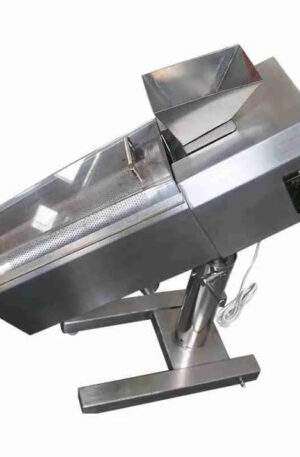
Capsule filling machines are another critical component of pharmaceutical manufacturing. These machines are used to fill empty gelatin capsules with the desired dosage of powdered or granular medication. Modern capsule filling machines are equipped with features such as automatic capsule orientation, dosage adjustment, and high-speed filling capabilities, allowing pharmaceutical companies to streamline production processes and meet increasing demands for various types of medications.
The transition from TDP (Tablet Press) to THDP (High-Speed Double Rotary) models represents a significant advancement in tablet press technology. THDP machines offer higher production speeds, improved efficiency, and enhanced performance compared to traditional TDP models. With dual rotary systems and advanced control mechanisms, THDP machines can produce a larger volume of tablets in a shorter time frame while maintaining consistent quality and accuracy.
In conclusion, the evolution of pharmaceutical machinery, including table press machines, capsule filling machines, and the shift to THDP models, has transformed the drug manufacturing industry. These technological advancements have not only improved production efficiency and product quality but also contributed to the development of new medications and treatment options for various medical conditions. As pharmaceutical companies continue to invest in research and innovation, the future of drug manufacturing holds promising possibilities driven by cutting-edge machinery and equipment.