Title: The Role of Pharmaceutical Machinery in Drug Manufacturing Processes
Pharmaceutical machinery plays a crucial role in the drug manufacturing industry, enabling efficient and precise production of various pharmaceutical products. Two key pieces of equipment in this process are the tablet press machine and the capsule filling machine, which are essential for the production of tablets and capsules, respectively.
The tablet press machine, also known as a tableting machine, is a vital tool in the pharmaceutical industry for shaping powders into tablets of uniform size and weight. There are different types of tablet press machines available, such as the TDP (Tablet Press) and THDP (Tablet Hardness Tester), each serving specific functions in the tablet manufacturing process. The TDP is commonly used for the compression of powders into tablets, while the THDP is employed to test the hardness of the tablets to ensure quality control.
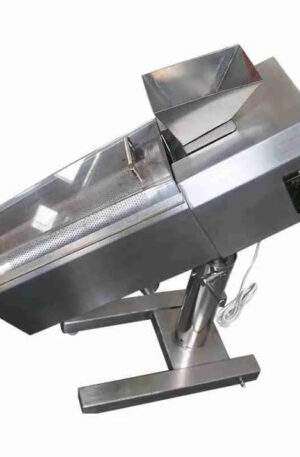
On the other hand, the capsule filling machine is utilized for filling empty capsule shells with the desired pharmaceutical formulation, whether it be in powder or liquid form. These machines are designed to accurately fill capsules with the precise amount of active ingredients, excipients, and other materials necessary for the drug product. Capsule filling machines come in various models and sizes, catering to different production capacities and requirements of pharmaceutical manufacturers.
The integration of advanced pharmaceutical machinery, such as tablet press and capsule filling machines, has revolutionized the drug manufacturing processes by enhancing productivity, reducing manual labor, and improving product quality. Automation and mechanization provided by these machines have significantly increased the speed and efficiency of pharmaceutical production lines, leading to higher output and lower operational costs for pharmaceutical companies.
In conclusion, pharmaceutical machinery like tablet press machines and capsule filling machines play a paramount role in the drug manufacturing processes, ensuring precision, consistency, and quality in the production of pharmaceutical products. The technological advancements in pharmaceutical machinery have brought about significant improvements in the efficiency and reliability of drug manufacturing, ultimately benefiting both pharmaceutical companies and consumers alike.