Article:
“Revolutionizing Pharmaceutical Production: The Role of Pharmaceutical Machinery”
The pharmaceutical industry stands at the forefront of innovation, constantly evolving to meet the growing demand for effective and efficient medicines. Central to this evolution is the development and utilization of advanced pharmaceutical machinery, such as table press machines and capsule filling machines. These machines play a crucial role in the production process, enabling pharmaceutical companies to manufacture high-quality drugs on a large scale while ensuring precision and consistency.
One of the key pieces of equipment in pharmaceutical production is the table press machine. Table press machines, also known as tablet presses, are used to compress powdered or granular ingredients into tablets of uniform size and weight. These machines are essential in the manufacturing of various types of pharmaceutical tablets, including immediate-release, extended-release, and enteric-coated formulations. The efficiency and accuracy of table press machines ensure that each tablet meets the required specifications, allowing for quality control and batch consistency.
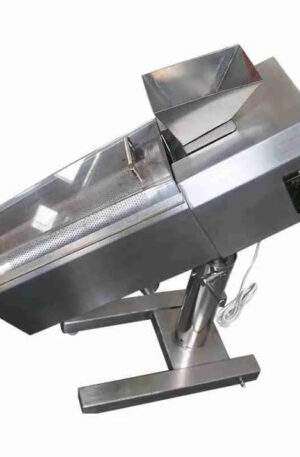
Another essential machine in pharmaceutical production is the capsule filling machine. Capsule filling machines are used to fill empty gelatin or vegetarian capsules with powdered or liquid medication. These machines are equipped with precision dosing systems to ensure accurate filling of each capsule. The versatility of capsule filling machines allows pharmaceutical companies to produce a wide range of capsule formulations, catering to different patient needs and preferences. This flexibility in production is crucial in meeting the diverse demands of the market.
In recent years, advancements in pharmaceutical machinery have led to the introduction of technologies such as TDP (Tablet Press Machine) and THDP (Tablet Hardness Testing Machine). TDP machines are designed to improve the efficiency and speed of tablet production, allowing for higher output and reduced manufacturing costs. THDP machines, on the other hand, are used to test the hardness of tablets, ensuring that they meet the required standards for dissolution and bioavailability. These technologies further enhance quality control processes in pharmaceutical production, contributing to the development of safe and effective medications.
In conclusion, the evolution of pharmaceutical machinery has revolutionized the way medicines are produced, allowing for high-quality drugs to be manufactured with precision and efficiency. The advancements in equipment such as table press machines, capsule filling machines, TDP, and THDP have played a significant role in shaping the pharmaceutical industry and meeting the increasing demand for innovative medications. As technology continues to progress, pharmaceutical machinery will continue to be at the forefront of driving advancements in drug development and production.
Word Count: 361