Title: **Revolutionizing the Pharmaceutical Industry: The Impact of Pharmaceutical Machinery on Drug Production**
The pharmaceutical industry has witnessed significant advancements and transformations with the introduction of sophisticated pharmaceutical machinery. One such pivotal innovation in drug manufacturing is the table press machine, which plays a crucial role in the production of oral solid dosage forms such as tablets. Table press machines utilize compression force to compact powdered ingredients into tablets of precise size and weight, ensuring uniformity and efficacy of the final product. This technology has greatly enhanced the efficiency and quality of tablet production, meeting the escalating demand for pharmaceutical products worldwide.
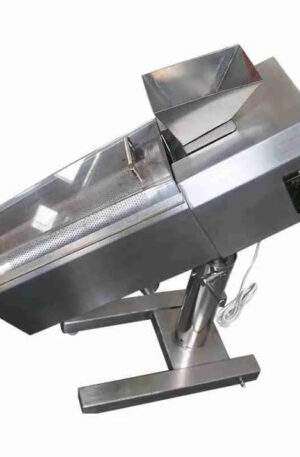
In addition to table press machines, capsule filling machines have revolutionized the pharmaceutical manufacturing process. These machines enable the encapsulation of powdered or granular substances into gelatin or vegetarian capsules with great accuracy and efficiency. The automation and precision offered by capsule filling machines have significantly reduced human error in the production process, leading to improved product quality and consistency. Pharmaceutical companies can now produce large quantities of capsules with varying formulations to cater to diverse patient needs.
Two common types of table press machines are the TDP (Tablet Press) and THDP (Tablet Hardness Tester). The TDP is a versatile machine that can be adjusted to produce tablets of different shapes, sizes, and thicknesses. Pharmaceutical companies can use the TDP to manufacture a wide range of tablets, including immediate-release, sustained-release, and chewable formulations. On the other hand, the THDP is essential for evaluating the mechanical strength and integrity of tablets by measuring their hardness. This quality control measure ensures that tablets can withstand handling and transportation without breaking or crumbling, maintaining their efficacy until they reach the end consumer.
Overall, the integration of advanced pharmaceutical machinery such as table press machines and capsule filling machines has significantly impacted drug production in the pharmaceutical industry. With increased automation, precision, and efficiency, these machines have improved product quality, reduced production costs, and accelerated time-to-market for new medications. As technology continues to advance, pharmaceutical companies can expect further innovations in machinery that will continue to shape the future of drug manufacturing and healthcare delivery.