Title: “Revolutionizing Medicine Production: The Role of Pharmaceutical Machinery”
In the field of pharmaceutical manufacturing, the advancements in technology have significantly revolutionized the way medicines are produced. Pharmaceutical machinery plays a crucial role in ensuring the efficiency, precision, and safety of the manufacturing process. Two key pieces of equipment that have played a vital role in this transformation are the tablet press machine and capsule filling machine.
The tablet press machine is an essential piece of equipment in pharmaceutical manufacturing. Also known as a tablet press or tablet compression machine, this device is used to compress powder or granular ingredients into tablets of uniform size and shape. Tablet press machines come in various types, including single punch, rotary, and multi-station tablet presses. One of the most commonly used tablet press machines is the TDP (Tablet Press) model, known for its reliability and ease of operation. The TDP machine operates by compressing powder or granules between two punches to form a tablet. The introduction of advanced features such as automated controls and monitoring systems has further improved the efficiency and accuracy of tablet press machines.
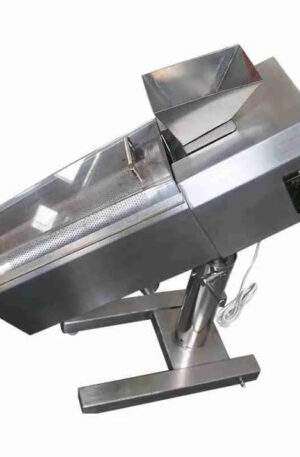
On the other hand, capsule filling machines are designed to fill empty capsules with pharmaceutical formulations. These machines come in different configurations, including manual, semi-automatic, and automatic capsule filling machines. The THDP (Automatic Capsule Filling Machine) is a popular choice in the pharmaceutical industry due to its high-speed filling capabilities and precise dosing accuracy. The THDP machine operates by separating empty capsules, filling them with the desired formulation, and sealing the capsules to produce the final product. The automation of the filling process in THDP machines has significantly increased the production capacity and consistency of capsule filling operations.
The integration of tablet press machines and capsule filling machines in pharmaceutical manufacturing has streamlined the production process and improved product quality. These machines not only increase production efficiency but also ensure the uniformity and accuracy of the dosage forms. The advancements in technology, such as the use of robotics and computerized systems, have further enhanced the performance and capabilities of pharmaceutical machinery.
In conclusion, the utilization of sophisticated pharmaceutical machinery, including tablet press machines and capsule filling machines such as TDP and THDP models, has transformed the medicine production industry. These machines play a crucial role in ensuring the quality, safety, and efficiency of pharmaceutical manufacturing processes. With the continued advancement of technology, pharmaceutical machinery is expected to further revolutionize the production of medicines, making them more accessible and reliable for patients worldwide.