Title: Revolutionizing Pharmaceutical Industry: The Role of Pharmaceutical Machinery in Manufacturing Processes
The pharmaceutical industry has undergone significant advancements in recent years, with a key driving force being the innovation and development of pharmaceutical machinery. In this modern era, the utilization of cutting-edge equipment such as table press machines, capsule filling machines, TDP, and THDP has revolutionized the manufacturing processes within pharmaceutical companies.
Table press machines are essential in the production of pharmaceutical tablets. These machines exert high pressure to compress powdered ingredients into precise tablet forms. The efficiency and accuracy of table press machines have significantly improved the production capacity of pharmaceutical companies, allowing for mass production of tablets with consistent quality.
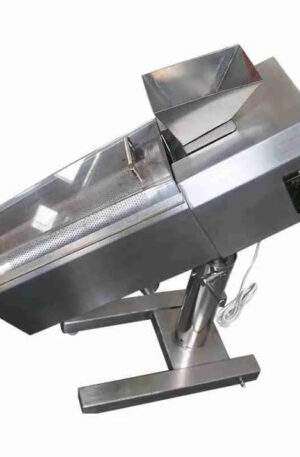
Capsule filling machines are another crucial component in pharmaceutical manufacturing. These machines automate the process of filling capsules with powdered or liquid medication. By utilizing capsule filling machines, pharmaceutical companies can streamline their production processes, ensuring uniformity in dosage and reducing the risk of human error.
TDP (Tablet Press) and THDP (High-Speed Tablet Press) machines are state-of-the-art equipment used for large-scale tablet production. These machines are capable of producing thousands of tablets per hour, making them indispensable in meeting the high demand for pharmaceutical products. The precision and speed of TDP and THDP machines have transformed the manufacturing capabilities of pharmaceutical companies, allowing them to meet market demands efficiently and effectively.
In conclusion, the integration of advanced pharmaceutical machinery such as table press machines, capsule filling machines, TDP, and THDP has brought about a paradigm shift in the pharmaceutical industry. These cutting-edge technologies have not only improved manufacturing processes but have also enhanced product quality, consistency, and efficiency. As pharmaceutical companies continue to invest in innovative machinery, the future of pharmaceutical manufacturing looks promising, with the potential for even greater advancements on the horizon.