Title: Revolutionizing Pharmaceutical Manufacturing: The Evolution of Pharmaceutical Machinery
Pharmaceutical manufacturing has witnessed significant advancements over the years, with the evolution of pharmaceutical machinery playing a crucial role in enhancing efficiency and quality. Among the key machines that have revolutionized the industry are the table press machine, capsule filling machine, TDP, and THDP.
The table press machine, also known as a tablet press, is a vital tool in the production of pharmaceutical tablets. It compresses powdered ingredients into compact tablets of uniform size and weight. The machine operates by applying pressure to the powder within a die, resulting in the formation of tablets. The efficiency and accuracy of the table press machine have greatly improved with technological advancements, allowing for high-speed production with minimal variations in quality.
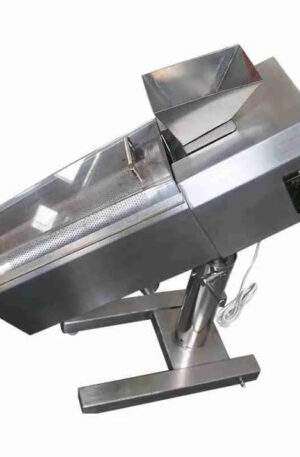
In parallel, the capsule filling machine has also played a pivotal role in pharmaceutical manufacturing. These machines automate the process of filling empty gelatin or vegetarian capsules with the desired medication. By precisely controlling the filling process, capsule filling machines ensure accurate dosage, consistent quality, and high production rates. Modern capsule filling machines are equipped with features such as automatic capsule orientation, powder level sensors, and adjustable dosing systems for optimal performance.
Two common types of table press machines used in pharmaceutical manufacturing are the TDP (Tablet Press) and THDP (High-Speed Double Rotary Tablet Press). The TDP is a single-station press suitable for small to medium-scale production, offering simplicity and ease of operation. On the other hand, the THDP is a high-speed rotary press designed for large-scale production, capable of producing thousands of tablets per hour. Both machines provide precise control over compression force, tablet thickness, and other critical parameters to ensure the quality and uniformity of the final product.
The integration of advanced technologies such as computerized controls, touch-screen interfaces, and data monitoring systems has further enhanced the capabilities of pharmaceutical machinery. These innovations have enabled pharmaceutical manufacturers to achieve greater consistency, efficiency, and compliance with regulatory standards. Additionally, the emergence of smart manufacturing concepts has facilitated real-time data analysis, predictive maintenance, and automation of production processes in the pharmaceutical industry.
In conclusion, the evolution of pharmaceutical machinery, including the table press machine, capsule filling machine, TDP, and THDP, has significantly transformed the landscape of pharmaceutical manufacturing. These machines have not only improved production efficiency and quality but have also set new standards for innovation and technology within the industry. As pharmaceutical companies continue to leverage cutting-edge machinery and technologies, the future of pharmaceutical manufacturing holds promising prospects for enhanced productivity and product development.