Title: Revolutionizing Pharmaceutical Manufacturing: The Impact of Pharmaceutical Machinery
In the dynamic landscape of pharmaceutical manufacturing, technological advancements have significantly transformed the production processes, with the introduction of sophisticated machinery playing a pivotal role. Among these groundbreaking innovations, the table press machine and capsule filling machine have emerged as key players revolutionizing the industry, enhancing efficiency, accuracy, and productivity.
The table press machine, also known as a tablet press machine, is a crucial equipment in the pharmaceutical manufacturing process. This machine is utilized to compress powdered ingredients into compact tablets of uniform size and weight. The efficiency of table press machines is often measured by metrics such as tablet compression speed, tablet hardness, and the consistency of tablet weight. The introduction of advanced table press machines such as the TDP (Tablet Press) and THDP (Tablet High-Speed Double Press) has enabled pharmaceutical manufacturers to achieve higher production rates and improved product quality. These machines utilize advanced technologies to ensure precise tablet formation and consistent output, meeting the stringent standards of the pharmaceutical industry.
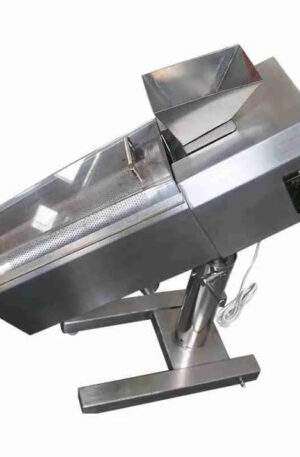
On the other hand, the capsule filling machine has revolutionized the process of encapsulating pharmaceutical formulations. This machine automates the process of filling empty capsules with the desired medication, ensuring accurate dosage and uniformity. Capsule filling machines come in various configurations, including manual, semi-automatic, and fully automatic systems. The utilization of advanced capsule filling machines has significantly reduced human error, minimized cross-contamination risks, and increased production throughput in pharmaceutical facilities. Manufacturers are increasingly adopting capsule filling machines equipped with state-of-the-art features such as automatic capsule feeding, precision dosing systems, and real-time monitoring capabilities to streamline the encapsulation process.
The integration of table press machines and capsule filling machines into pharmaceutical manufacturing processes has brought about a paradigm shift in the industry. These machines have not only enhanced operational efficiency but also improved product quality and consistency. The advanced features of TDP and THDP machines have enabled manufacturers to achieve higher production volumes while maintaining strict quality control standards. Similarly, the automation and precision of capsule filling machines have revolutionized the encapsulation process, ensuring accurate dosing and minimizing wastage.
In conclusion, the impact of pharmaceutical machinery, particularly table press machines and capsule filling machines, on the pharmaceutical manufacturing industry cannot be overstated. These advanced technologies have not only improved production efficiency but have also elevated the quality and consistency of pharmaceutical products. As the industry continues to evolve, the adoption of innovative machinery will play a critical role in shaping the future of pharmaceutical manufacturing, driving advancements in drug development and delivery.