Title: Revolutionizing Pharmaceutical Production: The Role of Pharmaceutical Machinery
Pharmaceutical production has undergone significant advancements in recent years, with the introduction of cutting-edge machinery playing a crucial role in enhancing efficiency and quality control within the industry. Among the most pivotal pieces of equipment revolutionizing pharmaceutical manufacturing are the table press machine and the capsule filling machine.
Tablet press machines, commonly referred to as TDP machines, are integral to the production of pharmaceutical tablets. These machines work by compressing powdered ingredients into tablets of precise shapes and sizes. This process ensures uniformity in dosage and facilitates mass production of tablets. The emergence of automated table press machines has further streamlined the tablet manufacturing process, increasing production rates while maintaining high levels of accuracy.
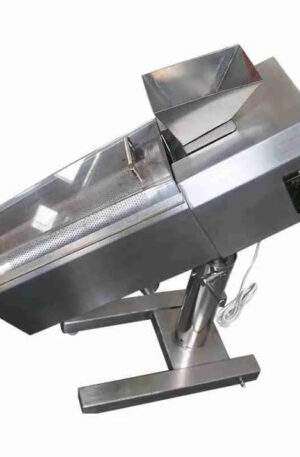
In parallel, capsule filling machines have also transformed the pharmaceutical manufacturing landscape. These machines, such as the THDP model, are used to efficiently fill capsules with powdered or liquid medication. By automating the capsule filling process, pharmaceutical companies can achieve greater consistency in dosages and reduce the likelihood of human errors. The versatility of modern capsule filling machines allows for the production of various types of capsules to meet diverse market demands.
The integration of table press and capsule filling machines into pharmaceutical production lines has not only improved efficiency but has also enhanced quality control measures. These machines are equipped with advanced technology that enables real-time monitoring of production parameters, such as tablet weight, hardness, and disintegration time. By ensuring adherence to strict quality standards, pharmaceutical manufacturers can deliver safe and effective medications to consumers.
Moreover, the adoption of table press and capsule filling machines has facilitated the rapid development and production of new pharmaceutical formulations. These machines enable quicker turnaround times for research and development initiatives, allowing pharmaceutical companies to bring innovative medications to market faster. The versatility and scalability of modern pharmaceutical machinery make it possible to adapt production processes to accommodate changing market demands and regulatory requirements.
In conclusion, the utilization of table press machines and capsule filling machines has revolutionized pharmaceutical production by increasing efficiency, improving quality control, and accelerating the development of new medications. As the industry continues to evolve, the role of advanced pharmaceutical machinery will remain paramount in driving innovation and ensuring the delivery of safe and efficacious pharmaceutical products to the global market.