Title: **The Role of Pharmaceutical Machinery in Drug Manufacturing**
Pharmaceutical machinery plays a crucial role in the drug manufacturing process, ensuring efficiency, precision, and quality in the production of medicines. Two key pieces of equipment in this process are the table press machine and the capsule filling machine, which are essential for the compression and encapsulation of pharmaceutical ingredients.
**Tablet Press Machine:**
The table press machine is a vital component in the production of tablets, which are one of the most common forms of pharmaceutical dosage. This machine operates by compressing powdered or granulated ingredients into solid tablets of uniform size and weight. The machine exerts controlled pressure on the mixture to form tablets that meet the necessary specifications for dosage consistency and disintegration.
There are various types of tablet press machines, such as the TDP (Tablet Pressing Machine) and the THDP (High-Speed Tablet Press). The TDP is commonly used for small-scale production and laboratory testing, while the THDP is designed for high-speed mass production in pharmaceutical facilities. Both machines are equipped with sophisticated features to ensure accuracy and efficiency in the tablet pressing process.
**Capsule Filling Machine:**
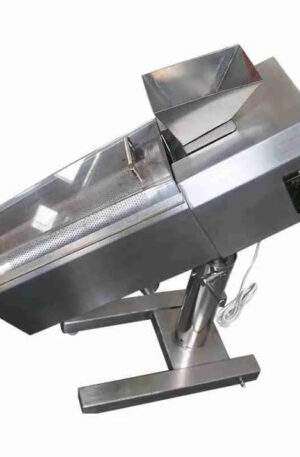
In contrast to tablets, capsules are another popular form of drug delivery that can contain powdered or liquid medications. The capsule filling machine is responsible for encapsulating precise dosages of pharmaceutical ingredients into two-piece capsules. This machine accurately fills the capsules with the specified amount of medication, ensuring consistency in each dose.
The capsule filling machine operates by automatically filling and sealing capsules, streamlining the manufacturing process and reducing the likelihood of human error. The machine can accommodate various capsule sizes and configurations, allowing pharmaceutical companies to produce a wide range of medications in capsule form.
**Integration of Machinery in Pharmaceutical Manufacturing:**
The seamless integration of table press and capsule filling machines is essential for pharmaceutical manufacturers to meet the demands of the healthcare industry. These machines work in tandem to produce high-quality medications that meet regulatory standards and patient expectations. By utilizing advanced technology and precise engineering, pharmaceutical machinery enhances the efficiency and productivity of drug manufacturing processes.
In conclusion, pharmaceutical machinery, including table press machines and capsule filling machines, play a critical role in drug manufacturing. These advanced machines enable pharmaceutical companies to produce tablets and capsules with precision, consistency, and efficiency. By investing in state-of-the-art machinery, pharmaceutical manufacturers can ensure the quality and safety of medications for patients worldwide.