Title: **The Advanced Technology Behind Pharmaceutical Machinery**
Pharmaceutical machinery plays a crucial role in the production of medications. Among the various types of machinery used in pharmaceutical manufacturing, table press machines and capsule filling machines stand out as essential pieces of equipment. These machines utilize advanced technology to ensure accurate and efficient production processes in the pharmaceutical industry.
Tablet press machines, also known as tablet presses, are used to compress powdered ingredients into tablets of uniform size and weight. These machines operate by exerting pressure on the powder within a die cavity to form tablets. The TDP (Tablet Press) and THDP (Tablet Hardness Tester) are two common types of tablet press machines used in the pharmaceutical industry. The TDP is known for its high-speed production capabilities, allowing for large quantities of tablets to be manufactured efficiently. On the other hand, the THDP is used to test the hardness of tablets to ensure they meet quality standards.
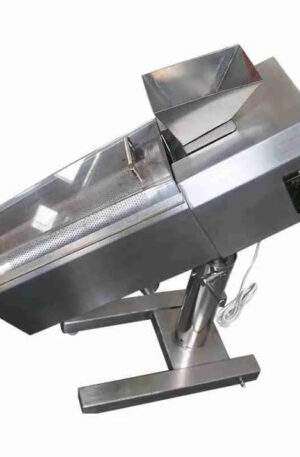
Capsule filling machines, on the other hand, are specifically designed for the efficient filling of capsules with powdered or liquid medications. These machines consist of a dosing system that accurately fills the capsules with the prescribed amount of medication. The capsule filling process is crucial as it directly impacts the dosage accuracy and quality of the final product.
The technological advancements in tablet press and capsule filling machines have revolutionized the pharmaceutical manufacturing process. Modern machines are equipped with advanced features such as automatic feeding systems, real-time monitoring sensors, and touch-screen interfaces for enhanced control and monitoring capabilities. These technological enhancements not only improve the efficiency of production but also ensure the quality and consistency of pharmaceutical products.
In conclusion, the use of advanced technology in pharmaceutical machinery, such as table press machines and capsule filling machines, has significantly improved the manufacturing process in the pharmaceutical industry. The integration of innovative features and automation in these machines allows for increased productivity, improved quality control, and streamlined production processes. As the demand for pharmaceutical products continues to rise, investing in advanced pharmaceutical machinery becomes imperative for pharmaceutical companies to meet the growing needs of the market and uphold high-quality standards.