Title: “The Role of Pharmaceutical Machinery in Ensuring Quality and Efficiency”
In the pharmaceutical industry, the use of advanced machinery plays a crucial role in ensuring the quality, efficiency, and safety of drug production processes. Among the various types of pharmaceutical machinery, table press machines and capsule filling machines are two key components that are widely used in the production of tablets and capsules.
Tablet press machines, such as the TDP (Tablet Press) and THDP (High-Speed Tablet Press), are essential for the efficient and precise manufacturing of tablets. These machines operate by compressing powdered ingredients into solid tablets of uniform size and weight. The TDP is a popular choice for small to medium-scale pharmaceutical companies, offering versatility and ease of use. On the other hand, the THDP is ideal for high-volume production due to its rapid production speed and high-output capacity.
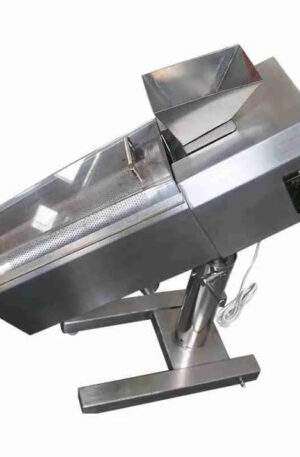
Capsule filling machines are another essential piece of equipment used in pharmaceutical manufacturing. These machines are designed to accurately fill empty gelatin capsules with the desired dosage of powdered or granular medications. By automating the filling process, capsule filling machines ensure uniformity in dosage and minimize the risk of human error. This is especially important in the production of high-precision medications where dosing accuracy is critical.
The integration of advanced technology in pharmaceutical machinery has led to significant improvements in drug manufacturing processes. Modern table press machines and capsule filling machines are equipped with features such as automatic feeding systems, real-time monitoring, and quality control mechanisms. These technological advancements not only enhance the efficiency of production but also ensure the consistency and quality of the final product.
Quality control is a fundamental aspect of pharmaceutical manufacturing, and pharmaceutical machinery plays a vital role in maintaining high standards. Table press machines and capsule filling machines are equipped with sensors and monitoring systems that detect any deviations from the preset parameters. By continuously monitoring and adjusting the production process, these machines help to prevent defects and ensure that each tablet or capsule meets the required quality standards.
In conclusion, pharmaceutical machinery, including table press machines and capsule filling machines, plays a fundamental role in ensuring the quality and efficiency of drug production processes. The use of advanced technology in these machines not only improves production efficiency but also guarantees the uniformity, accuracy, and safety of pharmaceutical products. As the pharmaceutical industry continues to evolve, the importance of high-performing machinery in drug manufacturing cannot be overstated.