Title: The Role of Pharmaceutical Machinery in Modern Medicine Production
Pharmaceutical machinery plays a crucial role in the production of medicines, ensuring accuracy, efficiency, and safety in the manufacturing process. Among the various types of pharmaceutical machinery, the table press machine and capsule filling machine stand out as essential tools in pharmaceutical manufacturing.
The table press machine, also known as a tablet press machine, is used to compress powdered ingredients into tablets of a specific size and shape. These machines come in different models, with the Single Rotary Tablet Press (TDP) and Double-sided Rotary Tablet Press (THDP) being commonly used in the industry. The TDP is a compact machine ideal for small-scale production, while the THDP offers higher production capacity and efficiency.
Tablet press machines operate by compressing granular materials under high pressure to form tablets. The process involves feeding the granules into the machine, compacting them into a die cavity, and ejecting the formed tablets. The speed and pressure can be adjusted to meet the desired specifications of the tablets, ensuring uniformity in size, weight, and dosage.
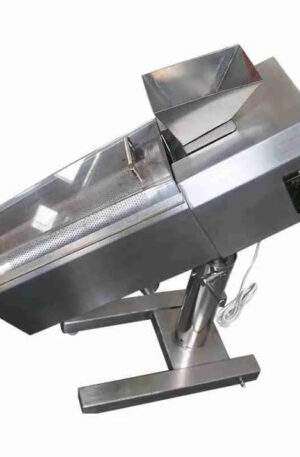
On the other hand, capsule filling machines are used to fill empty capsules with powdered, granular, or liquid ingredients to create unit dosage forms. These machines ensure precise filling of capsules to meet dosage requirements. Capsule filling machines come in different types, including manual, semi-automatic, and fully automatic machines, depending on the production scale and speed required.
The operation of a capsule filling machine involves separating empty capsules, filling them with the desired material, and closing the capsules to form a sealed unit. These machines offer high accuracy in filling dosage forms, reducing waste and ensuring consistency in the final product.
The integration of advanced technologies in pharmaceutical machinery has revolutionized the medicine production process, leading to increased efficiency, quality, and cost-effectiveness. Automated features such as data monitoring, process control, and quality assurance systems have enhanced the performance of pharmaceutical machinery, minimizing human error and enhancing product safety.
In conclusion, pharmaceutical machinery, including table press machines and capsule filling machines, plays a pivotal role in modern medicine production. These machines ensure precision, speed, and reliability in the manufacturing process, contributing to the development of high-quality pharmaceutical products for the healthcare industry. The continuous advancement of pharmaceutical machinery technology will further drive innovation and improve the overall efficiency of medicine production.