Title: “Revolutionizing Pharmaceutical Production: The Impact of Pharma Machines”
Pharmaceutical production has come a long way over the years, with advancements in technology playing a crucial role in improving efficiency, accuracy, and safety. One of the key components in modern pharmaceutical manufacturing is the use of pharmaceutical machinery, such as table press machines and capsule filling machines. These machines have revolutionized the way medications are produced, ensuring precise dosing, uniformity, and quality control throughout the process.
Table press machines, also known as tablet presses, are an essential tool in pharmaceutical manufacturing. These machines are used to compress powder formulations into tablets of precise sizes and shapes. The tablet press machine operates by exerting high pressure on the powder mixture, compacting it into a solid tablet form. This process ensures uniformity in dose strength and consistency in tablet appearance, crucial for pharmaceutical products. The compression force and fill depth can be adjusted to meet specific requirements, making table press machines versatile and adaptable to various formulations.
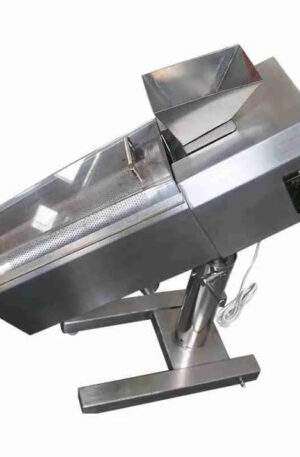
In addition to table press machines, capsule filling machines are another essential piece of equipment in pharmaceutical production. These machines are used to fill empty capsules with the desired dosage of medication in either powder or granule form. Capsule filling machines offer precise control over the fill weight and content uniformity, ensuring accurate dosing for each individual capsule. This automation not only improves efficiency but also reduces the risk of human error, leading to higher quality and more consistent products.
Two commonly used types of table press machines are TDP (Tablet Press Machine) and THDP (High-Speed Tablet Press Machine). TDP machines are suitable for small to medium-scale production, offering manual or semi-automatic operation. On the other hand, THDP machines are designed for high-speed production, catering to large-scale manufacturing needs. Both types of machines play a critical role in pharmaceutical production, meeting different production capacities and output requirements.
Overall, the use of pharmaceutical machines such as table press and capsule filling machines has significantly improved the efficiency, accuracy, and quality of pharmaceutical production. These machines ensure precise dosing, uniformity, and quality control, leading to safer and more effective medications for patients worldwide. As technology continues to advance, the future of pharmaceutical manufacturing looks promising, with further innovations expected to enhance the production process and drive improvements in the healthcare industry.