Title: “Revolutionizing Pharmaceutical Production: The Role of Pharmaceutical Machinery”
In the fast-paced world of pharmaceutical production, the utilization of advanced machinery has become essential to meet the increasing demands for efficient and high-quality drug manufacturing. Among the various types of pharmaceutical machinery, table press machines and capsule filling machines play a crucial role in ensuring the smooth and precise production process.
Tablet press machines, also known as tableting machines, are used to compress powder formulations into solid tablets of precise dimensions and weight. These machines come in different models, with Single Punch Tablet Press (TDP) and High-Speed Double Rotary Tablet Press (THDP) being two commonly used types. TDP machines are ideal for small-scale production and laboratory use, while THDP machines are designed for high-volume manufacturing.
TDP machines operate by feeding the powder blend into a hopper, which is then compressed by a single punch that moves up and down within a die cavity. The compact design and simplicity of operation make TDP machines suitable for producing tablets of various shapes and sizes with minimal setup time. On the other hand, THDP machines offer higher production speeds and greater precision due to their dual rotary design, where the upper and lower punches compress the powder blend simultaneously.
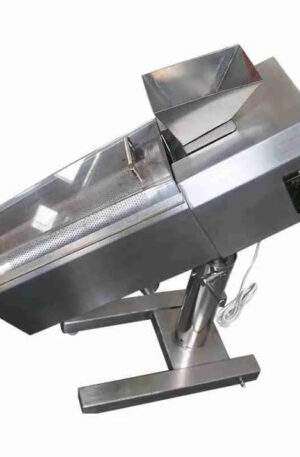
Capsule filling machines, on the other hand, are used to automate the process of filling empty gelatin or vegetarian capsules with powdered or granular formulations. These machines can fill hundreds or thousands of capsules per minute, ensuring uniform dosing and reducing the risk of human error. By utilizing capsule filling machines, pharmaceutical companies can increase production efficiency and consistency while maintaining stringent quality control standards.
In conclusion, the advancements in pharmaceutical machinery, particularly table press machines and capsule filling machines, have revolutionized the way drugs are manufactured. The integration of TDP and THDP machines has enabled pharmaceutical companies to produce tablets with precision and speed, meeting the demands of a rapidly growing market. Similarly, capsule filling machines have streamlined the process of encapsulation, improving productivity and product quality. As the pharmaceutical industry continues to evolve, the role of pharmaceutical machinery will only become more prominent in shaping the future of drug manufacturing.
Overall word count: 317